
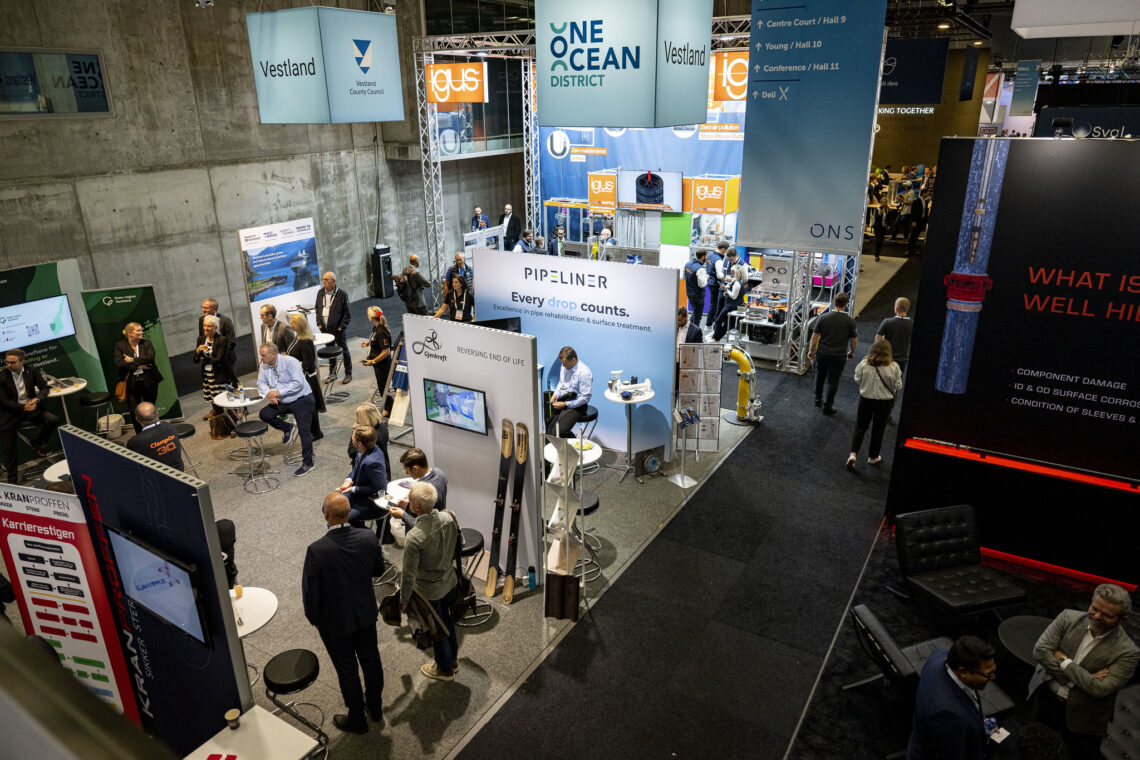
A sold exhibition floor says more about an industry than a panel title.
ONS 2026 will be held in Stavanger from 24 to 27 August. The official theme is “Courage,” framed around energy insecurity, geopolitical tension, climate pressure and difficult decisions shaping the next phase of the energy market. That is the language on the front door.
The harder signal is inside the building. A Strategic Conference Pass costs NOK 20,900 plus VAT; a standard ONS Ticket costs NOK 600 plus VAT; ONS+ downtown Stavanger is free. That structure still says something about the industry now: The NOK 600 ticket is more substantial than it first appears. It gives access not only to the exhibition, but also to conference tracks such as Energy Society, Net Zero Markets, Technical Sessions and Scale-Ups. That is the more interesting point: ONS has to serve the industry while also explaining the industry.
ONS lists scale figures few energy events can match: 72,676 visitors, 1,100+ exhibitors, 1,150 speakers and 102 countries. The 2026 exhibition space is already more than 95 percent sold out.
Companies do not book exhibition space, send teams to Stavanger and spend money on visibility because an industry is drifting toward irrelevance. They do it because contracts are still being pursued, technology still has to be sold, projects still need suppliers, and Europe’s energy transition still requires a deep industrial base.
That part is often polished out of the transition debate. Someone still has to build, weld, install, maintain, inspect, repair and replace the physical system that keeps Europe running. The language may be about transformation. The work is still steel, pressure, cables, vessels, substations, pipes, safety systems and people who know what weather does to a plan. This is where Stavanger matters.
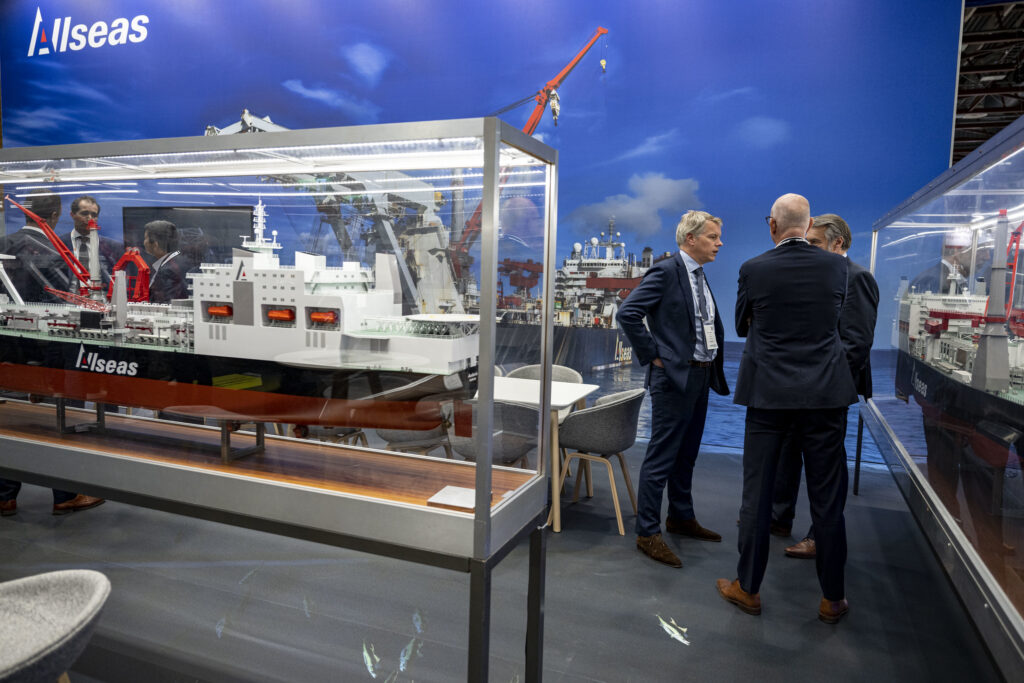
Stavanger remains one of Europe’s key energy clusters as supply security, offshore competence and transition investment converge. Photo source: ONS / Carina Johansen
The city is not important because it hosts an energy conference. It hosts an energy conference because the competence is already there.
Stavanger represents engineering depth, supplier networks and offshore experience built over decades. That competence was created by oil and gas. Much of it will also be required for whatever comes next.
Offshore wind needs vessels, ports, cables and people who understand harsh conditions at sea. Carbon capture needs pipes, compressors, storage knowledge, monitoring and discipline. Electrification needs grids, substations, permits, equipment and years of work that cannot be summoned by press release. Hydrogen, batteries and digital systems sound smoother in a strategy document than they look on the ground.
Europe has spent years discussing energy as if targets could substitute for supply. They cannot. A climate target does not power a factory. A subsidy does not build a grid by itself. A political deadline does not replace reliable gas when electricity demand rises, the weather turns cold or geopolitical risk becomes immediate.
That is why Norway’s position remains central. In 2025, Norway exported a volume of gas equivalent to more than 30 percent of total gas consumption in the European Union and the United Kingdom. For European buyers, Norwegian gas comes from a stable producer and is delivered through existing infrastructure after Europe was forced to reduce its dependence on Russia.
The real bottleneck is not ambition. It is delivery. Equinor and its partners are investing just over NOK 4 billion in a new subsea development intended to increase production from the Troll field. The TWIN project is expected to add approximately 11 billion standard cubic metres of gas, with production targeted to begin in 2028.
Its commercial logic is straightforward: deliver more gas to Europe while using existing infrastructure, greater standardisation and equipment reuse to reduce costs and accelerate production. That is energy realism. Money is still being committed to existing fields because Europe still needs the gas.
ONS 2026 will naturally speak about transformation, new technology and sustainability. The commercial activity surrounding the event points to something rougher: the industry is not gathering in Stavanger merely to discuss the future. It is gathering because the present remains expensive, technical and unresolved.
Energy companies now face a narrow corridor. They are expected to reduce emissions, secure supply, satisfy governments, maintain capital discipline and still deliver returns. Suppliers must serve existing oil and gas projects while positioning themselves for newer markets that may take longer to mature than politicians prefer to admit. Public language can move quickly; infrastructure cannot.
That is why the “Courage” theme is more interesting than it first appears. The safe version of courage is to repeat the approved transition language. The serious version is to admit that Europe’s transition depends on the same industrial competence many policymakers treat as yesterday’s problem.
The bookings suggest the market already understands this. ONS 2026 will bring the familiar language of transformation. The better story will be found in who comes to Stavanger, what they are selling, what they are financing and what Europe still needs when the speeches are over. Stavanger is not a relic of Europe’s energy past. It remains one of the places where Europe’s energy future must be negotiated, financed and built.